


GNECC Disseminates Research on the Breadth of Learning Opportunities and Education Financing for Girls and Children with SEND in Ghana
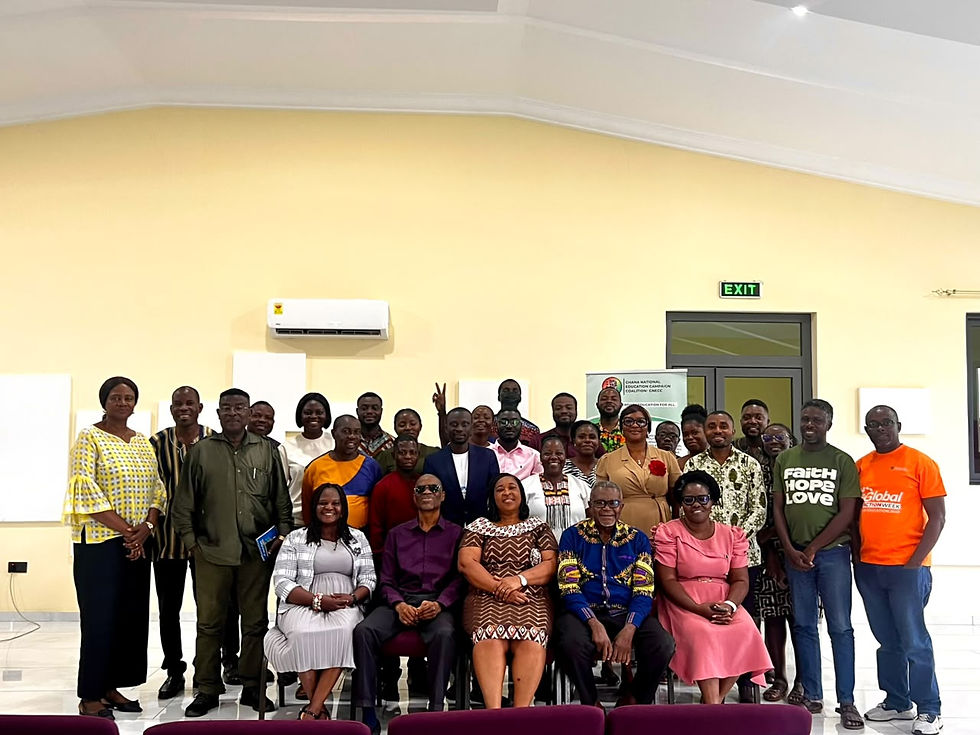
The Ghana National Education Campaign Coalition (GNECC) convened participants, including teachers, headteachers, parents, officials from the Ministry of Education (MOE) and Ghana Education Service (GES), education experts, and civil society organization (CSO) partners, for a landmark dissemination meeting on September 17, 2026, unveiling the findings of two major research studies shaping the future of education advocacy in Ghana.
The first presentation, the Breadth of Learning Opportunities report, examined how Ghana's education system delivers on curriculum, resources, and teacher support from kindergarten through Primary 4. Conducted in partnership with international researchers across four countries, the study uncovered sobering realities: over 10,000 schools now operate under trees or in makeshift structures, double the number from five years ago, while 73% of schools still lack basic technology infrastructure. The research also revealed troubling gaps in how curriculum priorities are set, with numeracy and critical thinking skills consistently ranked low by parents, teachers, and headteachers alike.
The second presentation, funded by the Global Partnership for Education, tackled education financing for girls and children with special educational needs and disabilities (SEND). Drawing on data from over 200 respondents across the Ahafo, Ashanti, and Oti regions, the study found that inadequate infrastructure (30%) and financial constraints (26%) remain the biggest barriers to access compounded by sociocultural factors like early marriage and restrictive gender norms. Strikingly, while 73% of adults know about government scholarships, more than half of learners themselves are unaware such support exists.

What set the day apart was the depth of engagement. Participants didn't just listen; they challenged, questioned, and contributed. Discussions ranged from the urgent need to reform Ghana's teacher posting system, to calls for universities to align teacher training with the national curriculum, to candid conversations about how gender dynamics in education must be understood differently across Ghana's diverse regions. A recurring theme emerged: government cannot do this alone. Parents, communities, traditional leaders, and civil society all have a role to play.
The insights and recommendations gathered on this day are already shaping GNECC's advocacy agenda, from pushing for renovated classrooms and reformed teacher deployment to expanding financing mechanisms that reach the most vulnerable learners directly. As GNECC's leadership noted in closing, this meeting marks "a beginning, not an end."
We extend our sincere gratitude to every teacher, parent, official, and partner who lent their voice to this important conversation. Together, we are building the evidence and the momentum for a more equitable, inclusive education system for every Ghanaian child.


Comments